
The number of participating automakers has fallen from 50 in 2018 to 30 this year. The count of exhibitors, including technology companies, has come down from 119 to 112. And showstopper luxury and supercar brands, including Toyota, Jeep, Lamborghini, Porsche, and Volvo will be missing. Similarly, the commercial vehicle makers also gave the show a miss -- a prolonged economic slowdown has dented their fortunes and near chances of any recovery.
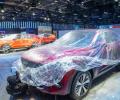
Owing to the poor market conditions and tepid sentiments, the size of the show has shrunk compared to the last edition, which took place in 2018. A majority of the two-wheeler makers, and several car and commercial vehicle makers, have opted out of this year's show, which opens for the media on Wednesday.
From Hyundai to Tata Motors, automakers are staring at a bleak future. With no succor provided in the Budget, the pain for companies is likely to continue for the next two quarters.

But it may come with a downside risk of further rise in prices of several products.

Chinese automakers Great Wall Motors, FAW Haima Automobile, and Changan Automobile, after dithering about entering India for some years, have been encouraged by the robust sales performance of the late entrants Kia Motors and MG Motors even in a slowing market.

Experts feel that mall owners anticipate an increase in costs to the tune of 15-20 per cent annually, prompting a mixed response to the '24 hours' initiative. A mall owner said while the policy is good in spirit, implementing it would be a challenge as night shopping or eating out wasn't a habit in Mumbai yet.

It's the first time in its 178-year-old history that the iconic British motorcycle firm owned by the Bloor family has got into an alliance. Three years after announcement, the two companies formally signed on the dotted lines on Friday for a long-term partnership, which aims to achieve global scale in a segment in which Royal Enfield has head-start.
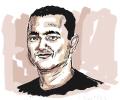
'As long as people are eating we will be there,' Rebel Foods CEO Jaydeep Barman tells Viveat Susan Pinto and Niraj Bhatt.

This number is more than the total number (1,071) of electric cars sold in India in calendar year 2019. MG has stopped registrations for the ZS and will cater to 2,409 of the total bookings.
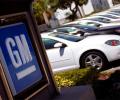
The move marks the entry of GWM, one of the largest manufacturers of sport utility vehicles (SUVs) and pick-ups, into the Indian market and a complete exit for GM from the country, two years after it stopped selling cars here.

The BS-VI norms are expected to increase the price of two-wheelers by 10-14 per cent.

Used since 1984 when late Rajiv Gandhi became the PM, the current residence was built over 12 acres of land, based on designs by New Delhi's chief architect Edwin Lutyens. However, with a new redevelopment blueprint on the table, the PM's residence is now expected to move to the South-West corner, behind South Block on Raisina Hill. Arnab Dutta reports.

Morgan Stanley Sales & Trading, US, believes the stock is better value for money than others and has a upside as high as 73 per cent. A slowdown in the economy has hit demand and led to a fall in overall consumption in an auto market which till recently was one of the fastest growing in the world.

Its proximity to popular tourist destinations like Agra, which attracts 45 per cent of the international passenger traffic at IGI, could be diverted to Jewar.

While Unilever has been aggressive, both organically and inorganically in the country, P&G's approach has been about achieving 'balanced growth' in terms of top line and bottom line.

Chocolate majors in India posted healthy top-line growth in FY19. While Mondelez India Foods - the marketer of Cadbury - continued to lead the pack, Nestle India, which dominates the confectionery space with leading brands like Kitkat and Munch, continues to hold the third spot in revenue. However, two of these companies - Mars International India and Hershey India - still remain in the red.

While Coca-Cola India improved its profit margin during the year, arch rival PepsiCo's margin was far lower. Coca-Cola India, which does not manufacture or market any products, gets majority of its revenue from royalty incomes against ownership of formulations for key products. Over the years, PepsiCo's operating revenue has come down significantly, as it kept divesting bottling plants to its franchise partners.

Sinha, who had both agency and client experience having worked at Coca-Cola in the 1970s and early 1980s, was the first woman to set up a national advertising agency. While Tara Sinha Associates was launched in 1985, Clarion was launched way back in 1955 at the start of her career.

Maruti is sticking to this strategy at a time when rival Hyundai is looking to make the most of the monopoly it will have in the compact diesel segment from April 1, 2020, when the BSVI emission norms kick in. The market leader's confidence stems from the rapid shift in favour of petrol in the PV segment. For newer models such as MG Hector and Seltos, nearly 75 per cent bookings are for petrol variants, Kia has 55 per cent from petrol variants. The change in customer preference from diesel variants to petrol has happened quickly over the past few years.

With founder Subhash Chandra no longer in the driver's seat at Zee, the acid test for Punit Goenka would be to take the financial investors along with him even as he strives to weather the latest storm. The question, now, is how he will deal with the challenges of being a professional CEO rather than an owner-CEO in the aftermath of his family offloading most of its promoter stake to a clutch of financial investors. However, the silver lining is that Zee remains the most profitable of the top four broadcasters in India.
 © 2026 Rediff.com - Investor Information - Advertise with us - Disclaimer - Privacy Policy - Sitemap - Feedback - About us - Terms of use - Grievances